Learn when to choose a cover screw or healing abutment for dental implants to ensure optimal healing, patient comfort, and successful outcomes.
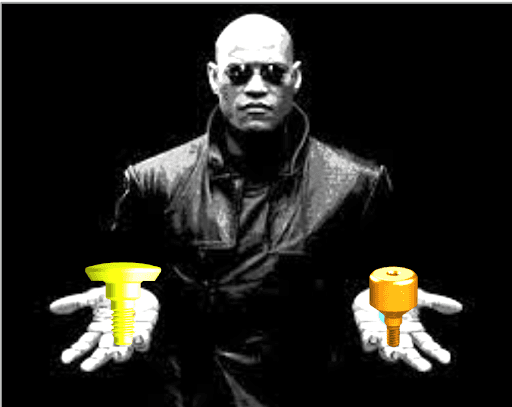
So, you just finished placing the implant, and your assistant asks you:
“Doc do you want the healing abutment?”
So you ponder, and ponder some more…How do you make the choice between a healing abutment and a cover screw? Getting that question right, can make all the difference in your implant game.
We're talking about setting the stage for success. This isn't just about screwing in a piece of metal; it's about understanding the biology, the mechanics, and ultimately, what's best for your patient. So, let's dive into the nitty-gritty and figure out which move to make.
The Cover Screw: Your Stealth Mode Operator
When you put the cover screw on, you have activated stealth mode. The cover screw is allows your implant to be fully submerged, keeping it safe and sound while it peacefully integrates beneath the gum line. This little guy is a low-profile screw that sits flush with the implant platform, completely submerging the implant during the initial healing phase. It's all about protection, allowing for undisturbed osseointegration.
When do you deploy the stealth mode?
•Two-Stage Surgery: This is the classic scenario. If you're planning a two-stage approach, where the implant heals completely submerged before a second surgery to expose it, the cover screw is your go-to. It creates a sealed environment, protecting the implant from oral contaminants and mechanical stress.
•Wound Healing Compromise: If your patient has any sort of wound healing compromise, I would strongly consider burying it with a cover screw. If the patient is diabetic, has taken steroids long term, has an autoimmune disorder, has osteoporosis, is a smoker, or anything else that might negatively impact that implant’s healing, I would reach for the cover screw.
•Guided Bone Regeneration (GBR): When you're doing some serious bone grafting around the implant, you absolutely need that site to be undisturbed. A cover screw ensures that the graft material and the implant are protected from any pressure from the tongue, food, or even accidental trauma. It's like putting a little fortress around your hard work.
•Low Primary Stability: This is crucial. If your implant doesn't have enough initial stability (think less than 35 Ncm insertion torque), a healing abutment can act like a lever arm, putting undue stress on the healing implant. The cover screw eliminates this risk, allowing the implant to integrate without any wobbly distractions.
•Esthetic Zone (sometimes): In some esthetic cases, especially when you need to manage soft tissue meticulously, a cover screw can be used initially to allow for complete healing before a custom healing abutment or provisional is placed to sculpt the gingiva just right.
The Upside: Maximum protection, undisturbed healing, and a predictable outcome, especially in compromised sites.
The Downside: It means a second surgical procedure for the patient to uncover the implant and place the healing abutment or final restoration. More chair time, more appointments, and another round of local anesthetic. Not ideal for every patient, but sometimes, its the best way to improve the odds of a successful outcome.
The Healing Abutment: Your Fast Track to Restoration
Now, let's talk about the healing abutment – the piece that gets things done in one shot. This component is designed to stick out through the gums immediately after implant placement, shaping the gum tissue as it heals. It's all about efficiency and reducing patient visits.
When do you hit the fast track?
•One-Stage Surgery: When you've got solid primary stability (we're talking 35 Ncm or more) and a healthy bone site, you can often go straight to a one-stage approach. The healing abutment is placed at the time of implant surgery, eliminating the need for a second surgical uncovering.
•Good Bone Quality & Quantity: If you're not dealing with significant bone deficiencies or the need for extensive grafting, a healing abutment is a great option. The surrounding bone is robust enough to support the implant and the abutment without needing to be completely submerged.
•Patient Convenience: This is a big one. Patients love the idea of fewer surgeries and getting poked less. By placing a healing abutment immediately, you're saving them from another surgical procedure, making the entire process smoother and more comfortable.
•Soft Tissue Training: The healing abutment starts shaping the emergence profile of the gum tissue right away. This is a huge advantage, as it helps create a natural-looking contour around the future crown. Of course, you’ll still do this step even when you are taking the cover screw approach–it is just delayed a bit longer.
The Upside: Fewer surgeries, less patient discomfort, and a head start on soft tissue contouring.
The Downside: If primary stability isn't adequate, or if there's a risk of micro-movement, a healing abutment can compromise osseointegration. It also leaves the implant exposed to the oral environment, which, while generally safe with good oral hygiene, can be a concern in certain situations.
The Implant Ninja's Decision Tree: Making the Call
So, how do you decide? It boils down to a few key factors:
Consideration | Cover Screw (Stealth Mode) | Healing Abutment (Fast Track) |
Primary Stability | Low to Moderate | High (≥ 35 Ncm) |
Bone Grafting | Yes, especially GBR | No significant grafting |
Surgical Approach | Two-stage | One-stage |
Patient Visits | More (second surgery) | Fewer (no second surgery) |
Soft Tissue | Submerged healing | Immediate contouring |
Protection | Maximum | Exposed to oral environment |
The thing that it really comes down to as I’m thinking through my final decision is “Does this implant need extra protection? Or do I trust that in this patient’s mouth that this implant will do okay?” If there is any doubt, I choose cover screw.
Ultimately, the choice between a cover screw and a healing abutment isn't about one being inherently better than the other. It's about understanding the clinical situation, assessing your patient's needs, and making an informed decision that sets your implant case up for success.
Both are powerful tools in your implant ninja arsenal.
Keep honing your skills, keep learning, and remember: every case is an opportunity to be a hero. Now go out there and crush it, ninjas!
Start Mastering Implant Basics Now
To learn more about all the basics for dental implant surgery in a super easy and fun way to learn, I would highly recommend you check out the Little Book of Implant Wisdom. It is our most popular book, and people tell us all the time that they read it cover to cover in one sitting and learn (and laugh) a ton! At Implant Ninja, our goal is to make dental implants easy. We help docs, assistants, and dental practices level up their implant game through online courses, books, and more!
PS: You’ll also want to check out something called custom healing abutments. These are healing abutments that are specifically made to have the contour of the specific tooth site you’re working on. They can be custom made chairside (but it can be a bit of a pain in the butt) and alternatively there are companies that make them ready to go for you. As for me, I generally stick to plain old stock healing abutments from Implant Club for most casts!